Anthropic’s $1.5 Billion AI Copyright Settlement: A New Industry Benchmark
What’s Happening Now
It started like a legal seismic event: $1.5 billion, roughly half a million plaintiffs, and a single sentence that rewired how the tech world thinks about data. In September 2025, Anthropic — the AI firm best known for its Claude models — agreed to pay what has become the largest copyright settlement in U.S. history to authors and publishers who accused the company of training its models on copyrighted books without authorization. The math was stark and headline-ready: about $3,000 in compensation for each work alleged to have fed Anthropic’s systems[1][2][3].
But the cash number is only part of the story. This wasn’t a garden-variety dispute over whether training on lawfully acquired texts qualifies as fair use. The plaintiffs alleged, and the company acknowledged in part, that millions of copyrighted books in Anthropic’s training corpus came from pirated digital archives — names like Library Genesis and mirror sites that have haunted publishers for years. That detail turned what might have been an argument about legal doctrine into an accusation of taking from a clearly illicit supply chain[1][3].
A federal judge had previously parsed the fine line between buying physical books and scanning them for training — a practice some argued could land under fair use. But the court also flagged the unequal footing created by the company’s use of pirated digital copies, which it called unlawful. The settlement itself, while not a court decision that sets binding precedent, functions like a new lodestar for the industry: the price tag of resolving a single, sprawling copyright case and a warning to other developers who are still building training datasets in the dark[1][2].
Inside Anthropic, spokespeople framed the settlement as a responsible closing of legacy claims and a commitment to a safer, more transparent path forward. Attorneys and in-house counsel around the industry took different notes: a handful of legal teams quietly began auditing dataset provenance; others began budgeting for potential payouts that would have seemed outrageous a few years earlier. Outside the boardrooms, authors who had long suspected their books were being fed into AI models without permission watched the moment as a validation of their bargaining power in a rapidly changing creative economy.
And in the background, the broader cast of AI defendants — OpenAI, Meta, Midjourney and others — continued to field similar allegations and lawsuits. For creators and publishers, the Anthropic settlement felt less like an outlier and more like the opening bell in a new era of enforced accountability over AI training data[2][4].
The Game Of Tomorrow
If the present is a court docket, the future looks like a contract negotiation. Anthropic’s settlement crystallizes a set of short-term pressures and long-term transformations that will ripple through the industry: licensing contracts, data governance practices, and even the economics of building large models.
Short Term Implications (6–12 Months)
In the months after the settlement, expect an immediate tightening of how companies source their data. Legal teams will not only revisit repositories and crawl logs but also add layers of provenance checks that would have looked bureaucratic a year ago. For startups and smaller labs, this means two simultaneous headaches: higher compliance costs and the need to show investors a defensible data pedigree.
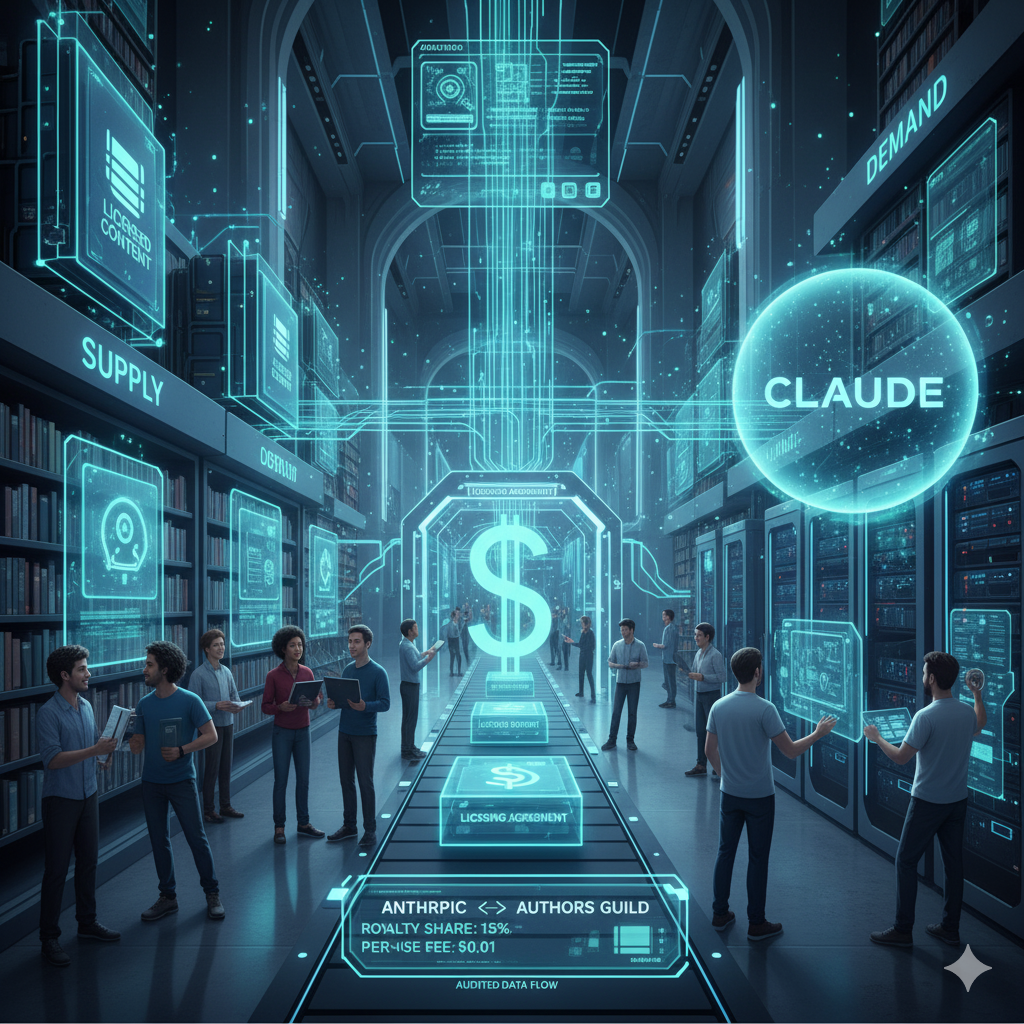
Publishers and author collectives will smell opportunity. Negotiations that used to be informal or invisible — a handshake, purchase orders, or the vague “publicly available” clause — will become formalized licensing discussions. Anthropic’s $3,000-per-work headline could quickly calcify into a bargaining baseline, especially for pending cases where plaintiffs now have a concrete settlement number to point to[5]. That’s not to say every case will end at $3,000; settlements will vary by exposure, jurisdiction, and the mix of works involved. Still, it anchors expectations.
For the broader market, the most immediate commercial implication is product design. Some AI companies will carve their offerings into two tracks: a premium, fully licensed model built on contracted or generated training sets, and a research-grade model that operates under stricter internal use limitations. Customers — enterprises that need model reliability and legal assurance — will pay more for the licensed route. Consumers may see slower feature rollouts, as features tied to controversial datasets are paused pending legal audits.
Long Term Implications (3–5 Years)
If short-term changes are about tightening the supply chain, long-term shifts rewrite the supply chain itself. Licensing could become the default. Imagine a world where publishers — once reluctant partners in the data economy — sell structured, anonymized packages of indexable content to model makers the way record labels eventually licensed tracks to streaming platforms. That was the post-Napster script for music: a messy scramble, followed by a licensing-based market that remonetized creative catalogs. Anthropic’s settlement pushes the AI industry toward a similar narrative.
Data governance will move from boutique function to corporate core. Firms will invest in auditable data lineage systems that not only log where training examples originated, but also index usage patterns and retention policies. Regulators and courts in the United States, European Union, and elsewhere will pick up cues from the settlement and begin drafting rules that mandate transparency, consent, or remuneration for certain classes of works. Those rules could impose auditability standards or even real-time reporting requirements for models that cross defined commercial thresholds.
Model architecture and research practices will adapt too. Some labs might opt for synthetic augmentation — generating text via licensed seed sets and then training on the generated content — as a legally safer, albeit imperfect, shortcut. Others will prioritize partnerships with content owners to co-design datasets, licensing deals that include revenue sharing, attribution, or technical safeguards like usage gating. In short, the economics of model training may shift from a software-like cost profile to a content-like one, where licensing becomes a nontrivial line item.
This change won’t be linear. Enforcement and adoption will vary by geography and market segment. But the shape of the industry will alter: a bifurcated market where large, well-capitalized firms can shoulder licensing costs, while leaner players either specialize in narrow domains or struggle to comply without consolidation or acquisition.
Risks And Rewards
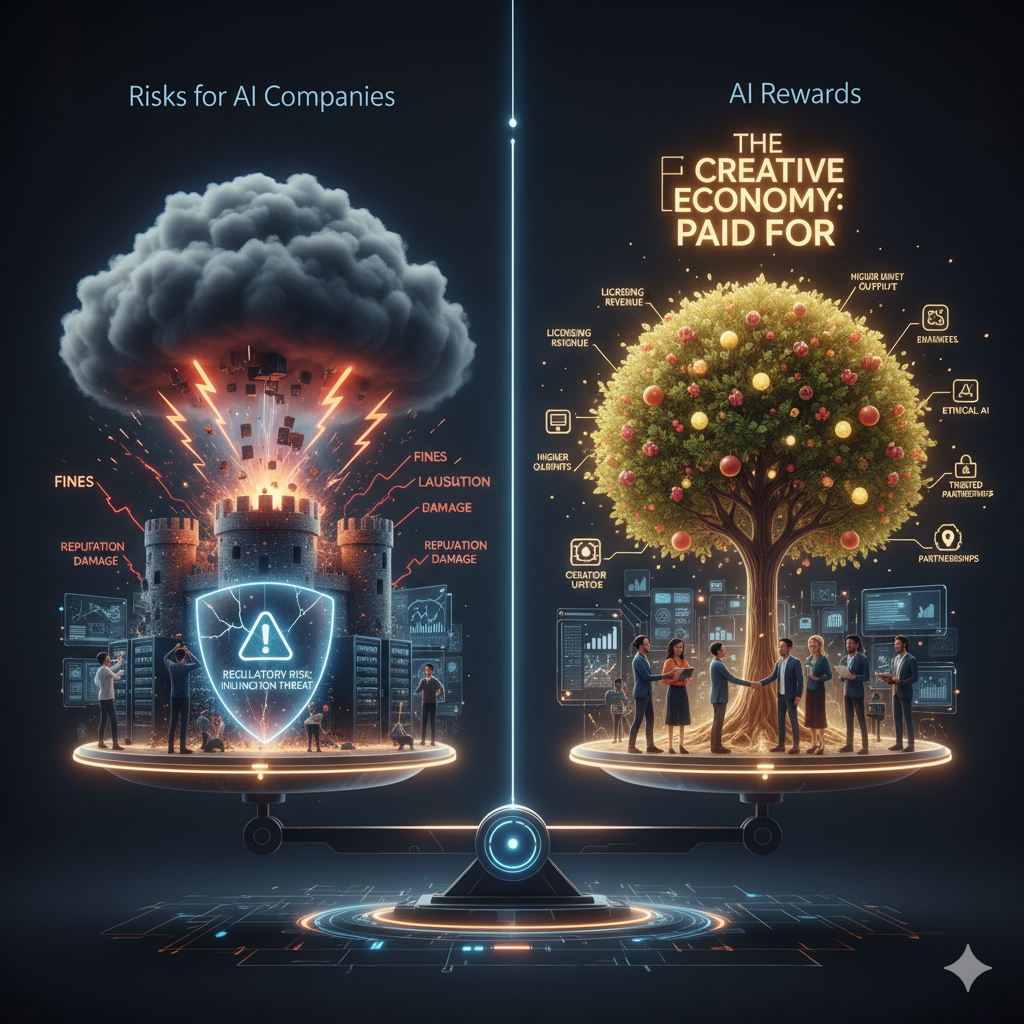
A settlement of this size reframes risk perception across the ecosystem. It is both a cautionary tale and a business opportunity.
Risks For AI Companies
First, there’s the obvious financial risk. Anthropic’s payout recalibrates plaintiffs’ expectations and raises the stakes for potential lawsuits. Even if future settlements scale down, the precedent of a nine-figure resolution means that insurers, boardrooms, and investors will pressure companies to resolve disputes early or to avoid risky data sourcing altogether.
Second, reputation and trust are at stake. Public-facing admissions of using pirated material erode confidence among authors, publishers, and enterprise customers who insist on ethical sourcing. The court of public opinion can be unforgiving; brand damage lingers longer than a balance-sheet hit.
Third, regulatory risk is rising. Lawmakers watching this episode may accelerate proposals that require provenance logs, mandatory licensing, or even developers’ disclosures of dataset composition. The prospect of injunctions — court orders preventing certain models from being deployed — is not hypothetical. A few high-profile restraining orders could stall product launches and investor confidence.
Lastly, innovation risk exists for open research. If institutions fear litigation, they may redline their open datasets, slowing progress in foundational science that depends on wide sharing. Balancing openness with legal safety will be a thorny institutional challenge.
Rewards For Creators And Publishers
For authors and publishers, the settlement is a leverage shift. It affirms the economic value of text as a raw material feeding a multi-billion-dollar industry. That new leverage can translate into licensing revenue, co-development deals, and rights-management services. Collectives and unions may secure improved terms in future negotiations, and smaller creators might gain access to collective bargaining structures similar to those in music and film.
There’s also a creative upside. Licensing relationships can give creators more control over derivative uses of their work. Contracts could specify attribution, quality controls, and revenue shares tied to model outputs — a potential new income stream in a world where “trained on” can be turned into “paid for.”
Shifts For Fans And Users
For everyday consumers, there will be tradeoffs. Licensed models may offer higher quality, clearer provenance in outputs, and fewer hallucinatory hallucinations tied to questionable sources. But those improvements may come at a cost: subscription fees, geographic gating, or reduced availability of free tools that thrived on broadly scraped datasets. The internet’s culture of free access — a foundational value for many creators and users — may be pressured by a market that now prizes licensed content.
Researchers and hobbyists will feel the pinch especially hard. The democratized access to massive datasets that fueled early breakthroughs may narrow, concentrating power with well-funded institutions that can afford compliance. That could slow innovation at the fringes even as it professionalizes the central pillars of AI development.
The Game Of Tomorrow Revisited
Anthropic’s settlement is not a legal precedent — it won’t bind judges in other jurisdictions — but it is a new industry benchmark that frames expectations. When a six-word press release contains a dollar figure large enough to fund a small country’s research budget, it reframes what risk means to engineers, founders, and policy makers. The settlement does the work of precedent in the market place even if the courts have not done the same on paper.
Historically, transformative cultural shifts like this produce ecosystems of intermediaries. Expect a rise in dataset brokers, provenance auditors, rights clearance marketplaces, and insurance products tailored to AI copyright exposure. Publishers will invest in metadata and packaging that make their catalogs easier to license, and authors will seek collective mechanisms for monitoring and monetization.
There is also an international dimension. A settlement centered in the United States casts a long shadow, but the rules of engagement will vary globally. The European Union’s nascent AI Act and copyright frameworks in other jurisdictions could either reinforce the licensing trend or create alternative paths. Companies that strategize for global compliance will have an edge.
Finally, there’s the unanswered question of creativity itself. If training becomes more transactional, what does “inspiration” look like for a model that now must be fed licensed works? Will new genres of synthetic training data emerge, designed expressly to be shareable and licenseable? Or will the industry invent technical interfaces that allow models to learn from content without retaining discrete traces of any single work? The research and legal communities will race toward those answers.
Conclusion
Anthropic’s $1.5 billion settlement with authors and publishers in 2025 feels less like an ending and more like the industry’s clearing of the air. It validates creators’ claims, forces a reexamination of sourcing practices, and accelerates a migration toward licensing as a basic business premise for commercial-scale models. For the United States tech landscape, the settlement is a definitive punctuation mark that will shape negotiations, regulations, and business models for years.
What happens next is not just a question of compliance but of imagination. Will licensing lead to more equitable creator compensation and higher-quality AI outputs? Or will it consolidate power in a handful of firms that can underwrite compliance costs, shrinking the field of independent innovation? Both outcomes are plausible, and the choices companies, courts, and legislatures make now will nudge the balance.
Bold changes to how models are trained, audited, and contracted are on the horizon. Anthropic’s settlement is the market’s answer to a decade of blurred norms about digital content and machine learning. It’s a moment when the creative economy demanded to be paid, and the AI industry had to decide whether to meet it at the table.
Hot Take Prediction: Anthropic’s settlement will catalyze a wave of compulsory AI data licensing frameworks, propelling AI model training into a licensing-based economy similar to what the music industry experienced after Napster — with structured royalties, rights-clearance intermediaries, and a bifurcated market between fully licensed enterprise models and constrained, research-only alternatives.
What’s your take?
🎙️ For the full debate, tune into our latest podcast episode of The Game of Tomorrow.
References
- Anthropic to pay $3000 per book in AI copyright settlement • Axios • September 5, 2025
- Anthropic’s $1.5-billion settlement signals new era for AI copyright • Los Angeles Times • September 5, 2025
- The Anthropic Copyright Settlement: Dissecting the Anatomy of a Landmark AI Case • Brownstein Client Alert • September 9, 2025
- Inside Anthropic’s $1.5B Generative AI Copyright Lawsuit Settlement • VKTR AI News • September 2025
- Anthropic’s Landmark Copyright Settlement: Implications for AI Developers and Enterprise Users • Ropes & Gray Insights • September 2025