From the Big Three to the Big Two: How Novak Djokovic Bridged Tennis' Greatest Generational Transition
If sport loves a clean narrative, tennis prefers a slow-burning epic. For two decades the plot centered on three characters—Roger Federer, Rafael Nadal, Novak Djokovic—whose combined Grand Slam history rewrote what dominance looked like. But stories need endings, and endings need heirs. In the strange, electric way that history retools itself, Novak Djokovic did something few expected: he stretched his prime long enough to create a bridge between the era of the Big Three and the new reign of Carlos Alcaraz and Jannik Sinner. What followed was not an abrupt handover but a season of overlapping greatness that made the generational transition feel deliberate, dignified, and—oddly—inevitable.
What’s Happening Now
The present moment in professional tennis reads like a cinematic scene: two youthful stars staking claim to the summit while a legendary figure refuses to step from the frame. Novak Djokovic’s appearance in the 2026 Australian Open final against Carlos Alcaraz was not merely another match; it was a narrative knot tying together twenty years of Grand Slam history.
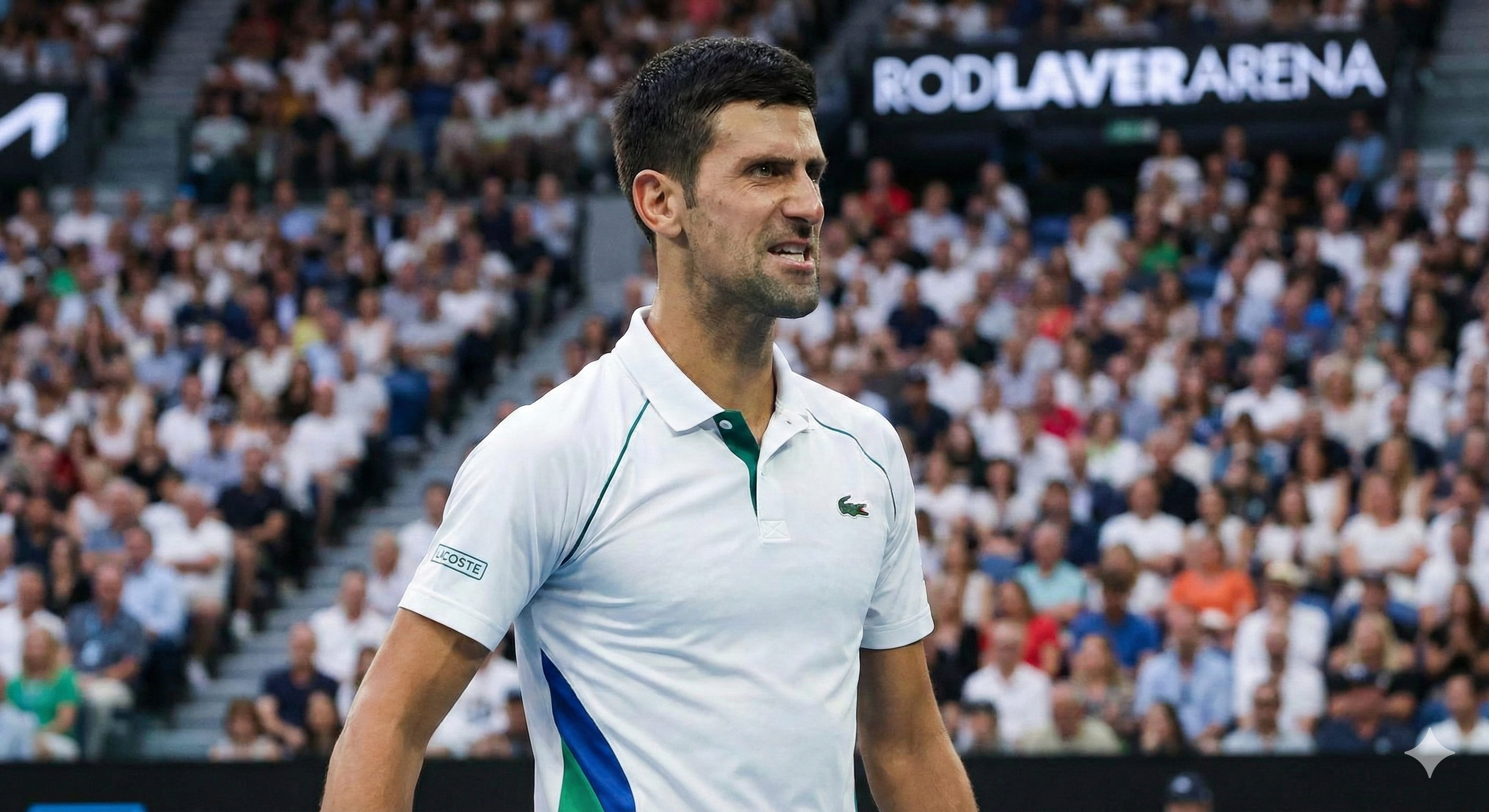
Djokovic at thirty-eight continued to defy the usual laws of athletic decline, reaching finals and pushing the new generation to their limits. Meanwhile, Alcaraz and Sinner have not simply filled a vacuum—they have reimagined what consistency and completeness look like in the 2020s. Where the Big Three once monopolized majors and number-one rankings, today’s headlines read like a calendar of two alternating dynasties. The two of them—both born in the 21st century—have split the game’s top honors with a frequency that demands we reframe how we talk about generational succession.
You can argue about numbers until your voice is hoarse: Djokovic’s tally of majors, the Big Three’s domination of Grand Slam finals across two decades, Alcaraz’s meteoric rise to multiple majors by age twenty-two, Sinner’s hard-court mastery—these are the facts that shape our understanding. But numbers only tell part of the story. The texture comes from moments: a five-set late-night epic at Wimbledon in 2023, a French Open final that stretched past five hours, the image of Djokovic teaching a younger player a split-step in the locker room. Those are the moments that convert statistics into narrative continuity.
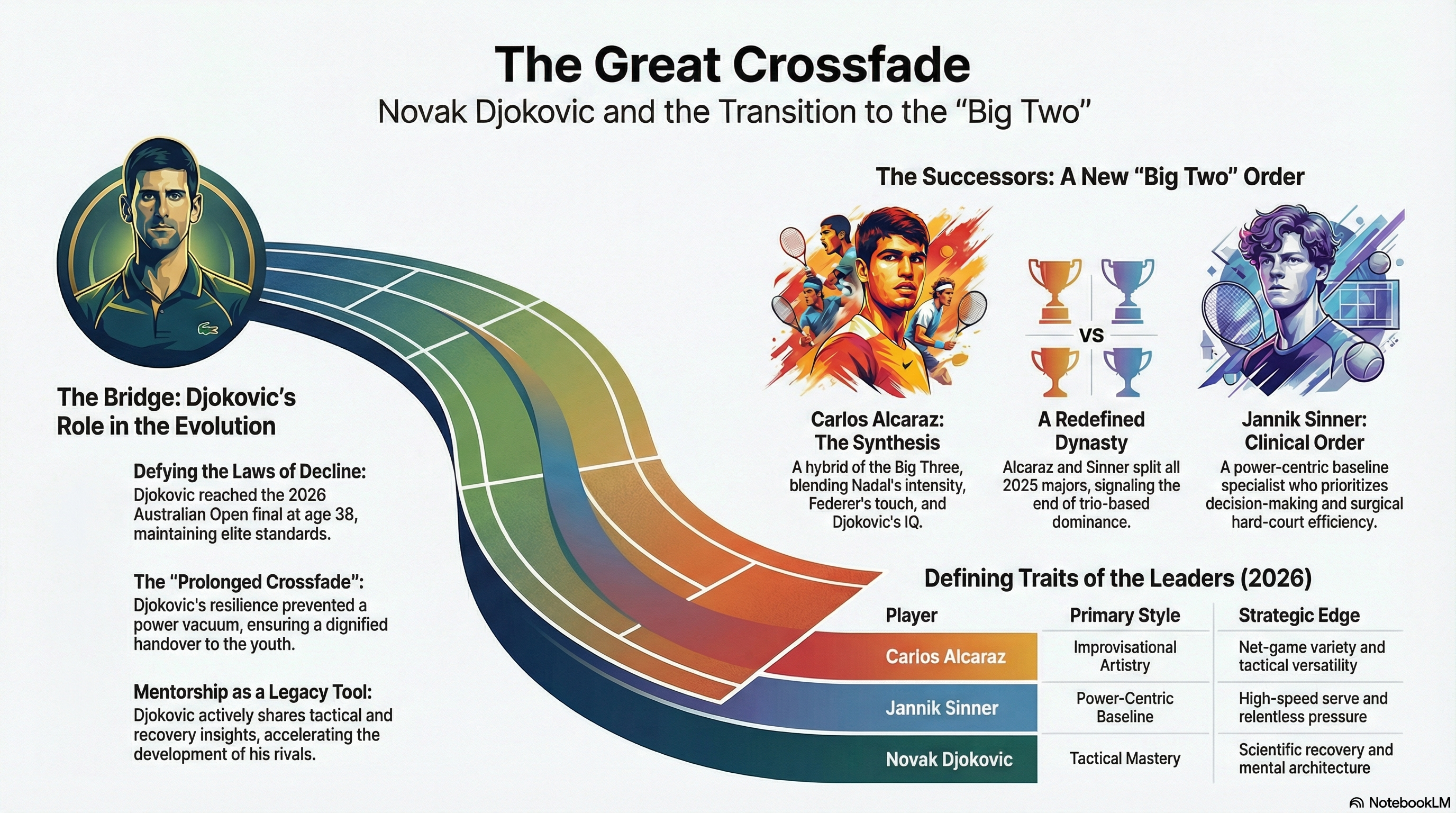
So where are we, practically? The Big Three’s shadow still falls across draws because Djokovic continues to compete. Federer’s graceful retirement and Nadal’s injury-forced exit left room for successors, but Djokovic’s resilience prevented that room from becoming empty. Instead of a clean cut—old champions gone, new kings seated—tennis has enjoyed a prolonged crossfade. Fans see echoes of the past in Djokovic’s play: the tactical mastery, the mental calm, the ironclad defense. They also see the future in Alcaraz and Sinner: speed, power, and the strategic variety that makes for modern polyvalent champions.
This is tennis in 2026: an artful collision of eras where legacy is taught as much as contested, and the stakes are both historical and very immediate—ranking points, Grand Slam trophies, sponsorship cycles, and a generation’s right to call time its own.
The Game Of Tomorrow
Young players rarely arrive fully formed. They usually borrow, adapt, and then invent. Carlos Alcaraz and Jannik Sinner did all three simultaneously—absorbing lessons from Federer, Nadal, and Djokovic, and then forging styles that complement and conflict in ways that make every match feel consequential.
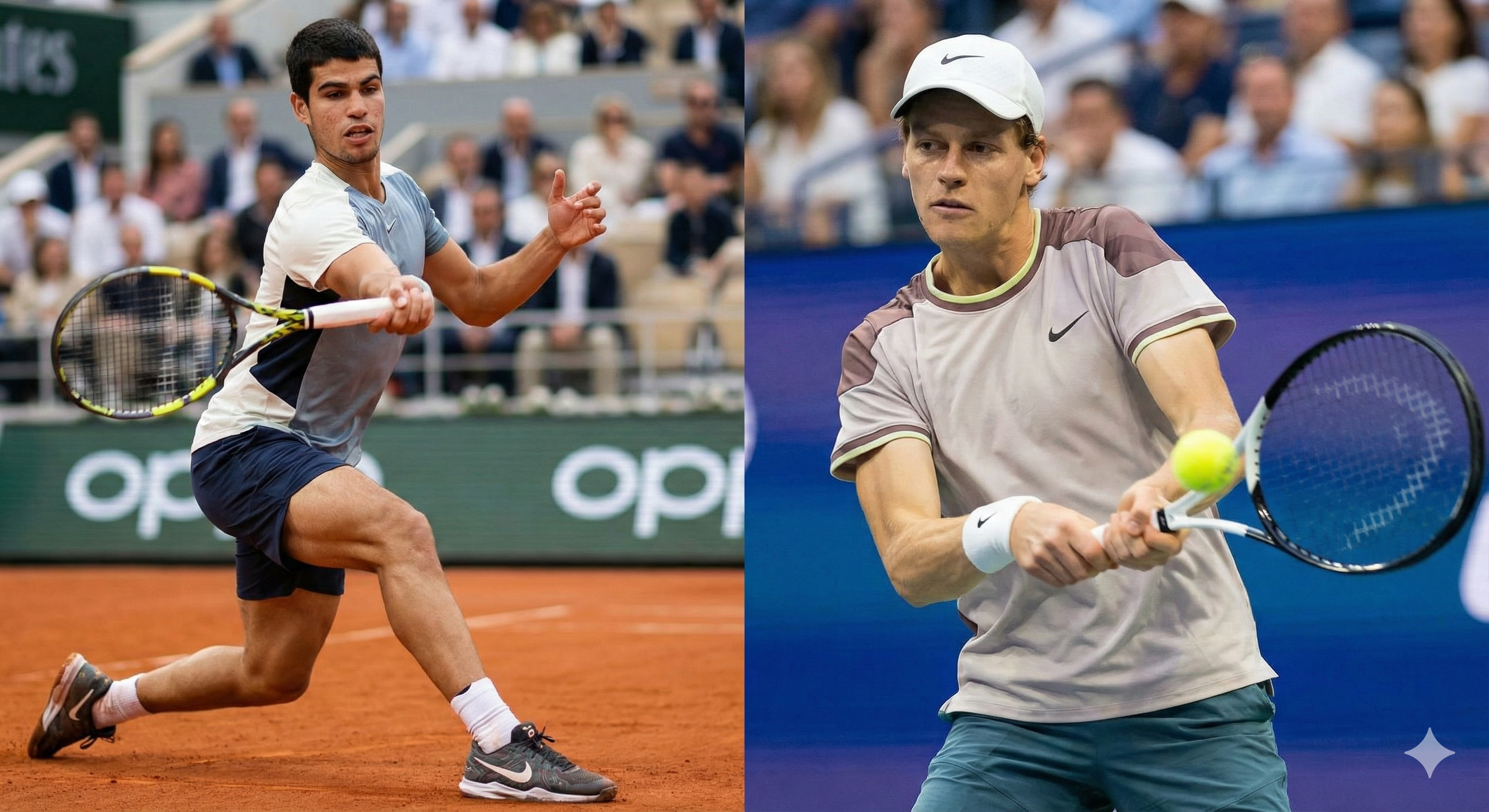
Alcaraz is a blend of grit and artistry. Coached in part within Nadal’s orbit and shaped by the Spanish developmental system, he arrived with a clay-bred instinct that translated to grass and hard courts with alarming speed. By twenty-two he had already compiled a Grand Slam record that outpaced equivalents in prior generations. His tactical palette includes aggressive forehands capable of opening the court, a two-handed backhand that can switch from defense to attack in a heartbeat, and a net game that turns rallies into punctuated conclusions. Media narratives have been quick to call him a synthesis of the Big Three—and not without reason. He moves with a Nadal-like intensity, crafts points with Federer-like touch, and demonstrates Djokovic’s court intelligence.
Sinner has taken a different route. Where Alcaraz blends stylistic ingredients, Sinner has doubled down on a relentless, power-centric baseline game that prizes decision-making and timing over flamboyance. He is a merciless grinder on hard courts and has grown into a player who converts pressure into points with surgical efficiency. His serve has matured from a functional tool into a genuine weapon—a critical evolution given tennis’s increasingly fast, aggressive baseline exchanges.
The pair’s rivalry is compelling because of contrast. Alcaraz’s improvisational brilliance meets Sinner’s clinical orderliness. They split the 2025 majors with an evenness that reframed what dominance could look like: not the trio-saturated era of the 2000s and 2010s, but a tight, high-quality duel between two near-complete players. Their matches have become cultural events, drawing stadiums and attention back to tennis in a way that matters for the sport’s commercial future.
But the game of tomorrow is not merely their head-to-head. It’s the strategic evolution they compel in others. Opponents now must prepare for both improvisation and unrelenting pressure in the same tournament. Coaches plan for both drop-shot defense and relentless serve-return exchanges. Young players coming through academies watch these two and rewire their training regimens—combining rotational strength work with footspeed drills and match-simulation patterns built for versatility. In short, Alcaraz and Sinner have sped the sport’s evolution while preserving the tactical subtleties that made the Big Three era a coaching goldmine.
If the Big Three taught us the virtues of all-court versatility and near-perfect matchcraft, the new era is showing how those virtues can be executed with modern athleticism and data-driven preparation. Match analytics now track point geography, transition-to-net success rates, and recovery metrics in ways that directly inform on-court strategy. The result: tennis that is simultaneously faster and smarter.
Risks And Rewards
Transitions are rarely clean; they are messy negotiations between past prestige and future potential. Djokovic’s longevity offered rewards but also raised questions. When a legend stays in the game, does he block opportunity or elevate standards? The answer has been both.
On the reward side, Djokovic’s presence preserved narrative continuity. Young players earned their breaks by beating him in the truest sense—on the biggest stages, under the harshest lights. Those victories felt like ascensions rather than inheritances. They carry more weight than the hollow feeling of collecting trophies in an empty hall of former champions. Djokovic’s strategic tournament selection—playing fewer events but peaking for majors—has shown others how to extend careers without sacrificing the intensity of competition. His scientific approach to recovery and the way he integrates modern sports medicine stands as a template for longevity.
On the risk side, there’s the danger of a prolonged overlap that could freeze a new generation’s rise. If an elder dominates just enough to rob emerging talents of defining moments, the sport can suffer a perceptual bottleneck. Thankfully, that hasn’t materialized into stagnation. Instead, Djokovic’s competitive wins and losses have been part of a handover: sometimes he wins and reminds the new guard what mastery looks like; at other times he loses and validates their readiness to rule.
Then there is the mentorship component—an underreported but vital reward. Djokovic has increasingly played the role of a conscious mentor. He’s offered tactical counsel, mental coaching, and the odd hallway pep talk. These moments have ripples. They accelerate knowledge transfer and make the generational transition a process rather than a rupture. When Alcaraz or Sinner speak about playing Djokovic, they describe not only an opponent but a measuring stick—a way to calibrate their own standards.
Finally, there are long-term structural implications for professional tennis. Sponsors and broadcasters favor storylines with continuity. Fans prefer dynasties to vacuum eras. By bridging two dominant epochs, Djokovic has helped preserve commercial stability as well as competitive intrigue.
Djokovic’s Mentorship And Legacy Work
If this were a novel, Djokovic’s late-career chapters read like a conscious epilogue written in public. He has reframed his presence as a gift to the sport: an embodied curriculum for excellence and longevity.
He speaks openly now about lowering expectations in a way that liberates rather than diminishes him. That paradox—competing with less pressure and more focus—has been instructive for younger players who fear that a career must burn at full intensity until it collapses. Djokovic instead models a different career arc: curated effort, selective tournaments, and deliberate peak performance for events that matter most.
His mentorship has taken multiple forms. Publicly, he offers advice on nutrition and movement; privately, he mentors younger players about the emotional architecture of a professional life—how to manage coaches, how to navigate media cycles, and how to transform defeats into learning scaffolds. The most striking aspect is how willingly he shares tactical insights that once would have been guarded. That transfer is how eras knit themselves together: not through conquest alone but through education.
There are also symbolic choices. Djokovic has hinted that the 2028 Los Angeles Olympics could serve as a capstone, and that framing shapes how we read his final seasons. If true, his exit will be not an ignoble fade but a planned curtain fall that honors both personal ambition and the sport’s future. It’s the difference between being forced out and choosing to pass the torch in a way that honors the sport.
The Stakes For The Sport
What does all of this mean for tennis as a global pastime and a professional ecosystem? For one, the game’s marketability remains strong. Rivalries—classic human drama—sell tickets and subscriptions. The Alcaraz–Sinner rivalry benefits from the Djokovic bridge because their wins are validated against a living legend.
For player development, the new paradigm is clear: cultivate physical resilience early, integrate sports science with tactical training, and prepare psychologically for long careers where mentorship matters. Academies adjust: they teach Alcaraz-style improvisation and Sinner-style point termination in the same week.
But the sport must guard against complacency. Two-player dominance has the potential to become exclusionary if the training ecosystem doesn’t keep producing depth. The ATP’s competitive health depends on a pipeline of players who can occasionally break through. The good sign in 2026 is that several younger players—some already knocking on title doors—are being forced into higher standards earlier than they would have been otherwise. That pressure produces the very unpredictability that keeps sport alive.
Conclusion
The arc from the Big Three to the Big Two reveals something essential about competitive cultures: transitions are healthier when they include mentors, not just rivals. Novak Djokovic’s late-career choices—his meticulous approach to fitness, his selective scheduling, his willingness to teach—turned what could have been a disruptive decline into an evolutionary bridge. Carlos Alcaraz and Jannik Sinner didn’t inherit greatness; they earned it by dismantling argument through performance and by thriving within a competitive ecosystem that Djokovic helped keep intact.
Bold Hot Take Prediction: Djokovic will retire after the 2028 Los Angeles Olympics, having reframed his final years not as a last grasp at records but as a deliberate mentoring chapter; in the decade that follows, Alcaraz and Sinner will not only dominate majors but also accelerate a diversification of playing styles that produces multiple credible third and fourth contenders by 2032.
What’s your take?
🎙️ For the full debate, tune into our latest podcast episode of The Game of Tomorrow.
References
- Novak Djokovic Reaches 2026 Australian Open Final • ATP Tour • Feb 2026
- Carlos Alcaraz: The Rise to Seven Majors • Wimbledon Media • Jan 2026
- Jannik Sinner and the New Hard-Court Order • ESPN • Dec 2025
- The Big Three’s Grand Slam Legacy • The New York Times • Oct 2024
- Rafael Nadal’s Retirement and Career Retrospective • BBC Sport • Oct 2024
- Match Analytics and the Modern Tennis Player • The Guardian • Mar 2025
- Djokovic On Mentorship And Longevity • Tennis.com • Jan 2026
- Alcaraz vs Sinner: The Rivalry Shaping the 2020s • ESPN • Nov 2025