No Words, $900 Million: How Khaby Lame Redefined the Creator Economy
What’s Happening Now
It started like a social-media fairy tale and ended on a corporate balance sheet — Khaby Lame, the silent comedian who taught the internet to laugh without words, has crossed a threshold that used to be reserved for pop stars and tech founders. In January 2026, the 25-year-old sold Step Distinctive Limited to Rich Sparkle Holdings in an all-stock transaction reported at roughly $900–$975 million, a move that reframes what a creator can be: not just an attention engine but a material asset in public markets.
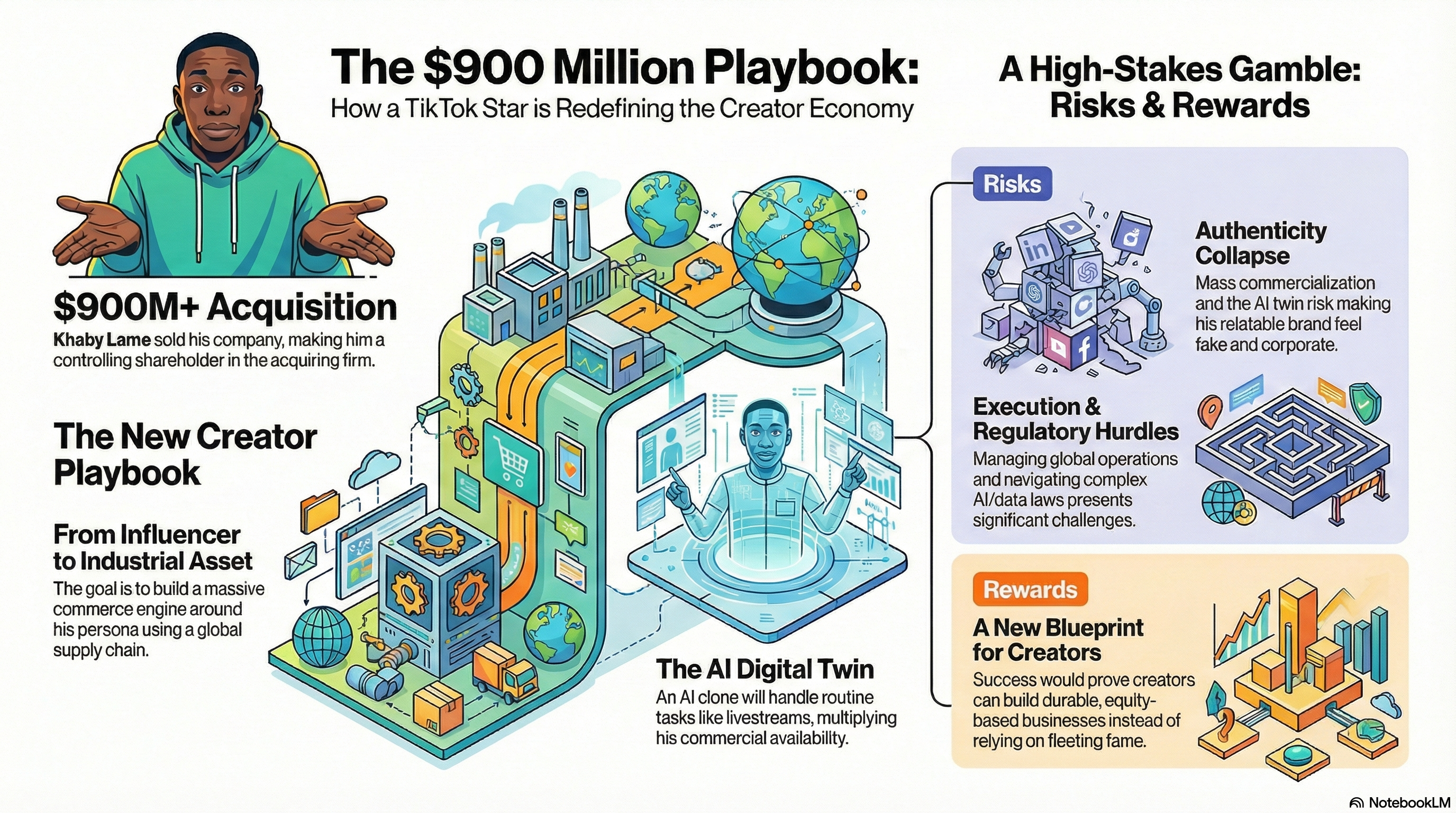
There is theatre in that transformation. Lame, who rose from a CNC machine shop in suburban Turin to TikTok’s most-followed account, will now sit as a controlling shareholder in the very company that bought his brand. The deal hands Rich Sparkle exclusive global commercialization rights for an initial 36 months — everything from TikTok Shop listings to livestream commerce, from product collaborations to global endorsement management. That means the quiet gesture that made him famous — the palms-up, “really?” look — has been translated into a business playbook meant to run like a factory.
This arrangement is not a sponsorship or a licensing handshake; it’s an attempt to industrialize content monetization at scale. The press materials projecting north of $4 billion in annual sales are audacious: coordinated product planning, paid media growth, storefront optimization, cross-border supply chains, fulfillment, and after-sales service all synchronized to a single creative persona. Whether Rich Sparkle can convert viral gestures into repeatable commerce systems is the story now unfolding.
At the heart of the transaction is a second, thornier bet: an AI digital twin built from Khaby’s face, voice, and mannerisms. The promise is logistical — multiply his availability, translate his gestures into multiple languages, run simultaneous livestreams across time zones — and philosophical: can a replicated persona maintain the authenticity that gave the original its value? Early descriptions suggest the twin will be used for routine commerce interactions where scale matters more than serendipity. But even as engineers sketch that avatar, marketers are already imagining new ways to merge livestream commerce with the sort of personality-driven storefronts that reign on TikTok Shop.
Rich Sparkle did not appear from nowhere. Historically a corporate services and financial-printing firm, the Hong Kong-listed company is making a conscious pivot into creator-led commerce. Days after the Lame transaction, Rich Sparkle announced integration plans with Three Sheep Group, a creator ecosystem anchored by a Chinese livestream star. Together these moves aim to stitch a “super traffic matrix” — a half-billion to three-quarter-billion users of attention aggregated across Western and Chinese markets. For a public company previously known for back-office services, this is a bold repositioning toward consumer-facing, creator-driven commerce.
Khaby’s life story helps explain why this particular bet feels simultaneously obvious and audacious. Born in Dakar and raised in Italy, he turned a pandemic layoff into a global career by posting wordless comedy. His decision to remove words from his content wasn’t a branding memo: it was a vulnerability-transcending tactic that obliterated language barriers and produced universal relatability. That same universality is the asset Rich Sparkle has bought into: a face and set of gestures that can be understood from Sao Paulo to Seoul.
If you’ve been following the data, the trajectory was fast. From 100 million followers within months of launching, to the top of TikTok’s leaderboard by mid-2022, Khaby’s ascent was a reminder that the math of virality still surprises. Brands noticed early — luxury houses, travel platforms, crypto exchanges, and entertainment studios all signed on. But where sponsorship revenue had been the typical creator path forward, this acquisition suggests a different route: creator becomes shareholder, talent becomes IP, and influence becomes infrastructure.
Even the timing feels strategic. Khaby’s brief immigration friction in 2025 — a well-publicized visa overstay and voluntary departure from the U.S. — created reputational ripples and perhaps a practical constraint on rebuilding U.S. presence quickly. Partnering with an international, publicly traded infrastructure potentially reduces the need for on-the-ground recovery and accelerates access to markets where livestream commerce already thrives.
The Game Of Tomorrow
If the last decade taught us anything about internet culture, it’s that structures follow attention. The Khaby–Rich Sparkle deal maps a three-phase experiment: scale attention into commerce, automate the repetitive parts with AI, and institutionalize the rest with capital markets. What will that look like in practice over the near and medium term?
Short-Term Implications (6–12 Months)
The immediate months after the close will be a stress test. Rich Sparkle will need to fuse Anhui Xiaoheiyang’s livestream commerce know-how with Khaby’s global audience — a cultural and operational integration as much as a technical one. Expect rapid product experiments: print-on-demand apparel and simple accessories that lean on Khaby’s visual brand, A/B-tested drops on TikTok Shop, and co-branded capsule collections that serve both as revenue drivers and data-gathering pilots.
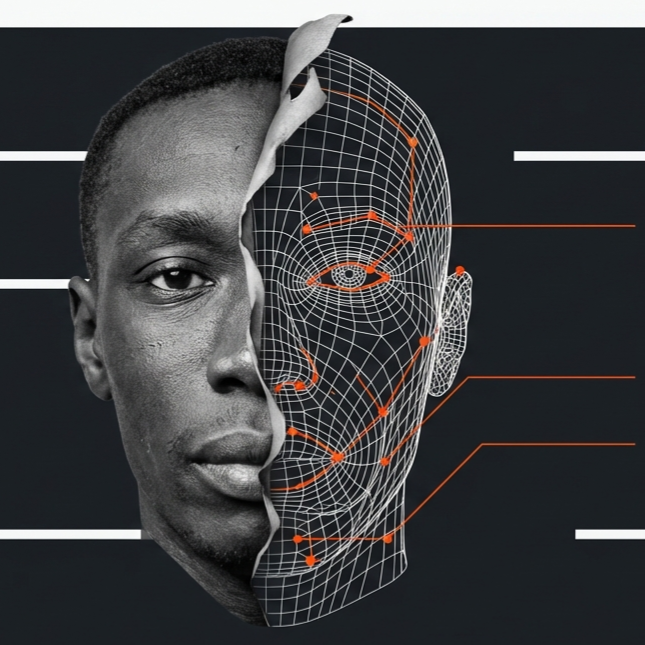
The AI digital twin will likely graduate from lab demos to controlled pilots. Early applications are predictable: off-peak livestreams, multi-language short-form content, and high-volume customer service automation. Those uses free Khaby’s calendar for high-signal moments — major campaigns, bespoke appearances, and flagship launches that maintain the aura of scarcity around his real presence. It’s a split-lane play: let the AI handle repeatable, low-stakes tasks; keep the human for high-impact authenticity.
TikTok Shop integration will move fast. The platform’s e-commerce features are already one of the fastest-growing commerce channels for creators, and Khaby’s scale makes his storefront an obvious candidate to become a mega-vendor. But the integration is not only technical; it’s regulatory and reputational. The U.S. policy debate around TikTok’s platform governance remains unsettled, and Rich Sparkle’s Hong Kong–China operational footprint will require careful structuring to avoid political headwinds in American markets. That makes the Middle East and Southeast Asia particularly attractive short-term growth theaters: less regulatory friction and strong appetite for livestream commerce.
Long-Term Implications (3–5 Years)
Fast forward three to five years and the real question is replication. If Rich Sparkle demonstrates that a major creator can be converted into a multi-billion-dollar commerce engine, other creators and capital will follow. The dominant pattern may shift from low-term sponsorship catalogs to long-term equity partnerships in scalable commerce platforms. Creators become not just talent but co-owners of distribution, supply chains, and customer relationships.
The AI digital twin, once normalized, could become a standard asset class for top-tier creators. Brands may license or collaborate with an avatar that can run promotions and customer interactions around the clock. But normalization does not mean acceptance without friction. Consumers already show skepticism toward AI-generated content; the value of human authenticity will likely reassert itself as a premium differentiator. The balance will be delicate: use AI for scale, but preserve human moments for culture.
The structural professionalization of the creator economy is another foreseeable trend. Institutional money — private equity, VC, and publicly traded companies — will pour into creator infrastructure: talent management at enterprise scale, logistics, production studios, and AI tooling tailored to creators. Expect consolidation: fewer companies will own the platforms that enable commerce at scale, and those companies will compete on operational excellence rather than mere reach.
There’s a capital-markets angle worth noting. Rich Sparkle’s strategic pivot — and the valuation delta implied by a single creator asset contributing materially to a public company’s future revenue — could reset expectations about how markets value attention-based assets. If the $4 billion sales projection holds, a single creator could justify a measurable slice of a public firm’s market cap. That will draw a different class of investor to creator infrastructure, one less interested in virality metrics and more focused on recurring revenue, gross margins, and fulfillment efficiency.
Risks And Rewards
The potential upside here is enormous: imagine a creator-run brand that scales as quickly as a TikTok trend but sustains revenue like a legacy CPG company. Creator-led beauty and fragrance lines, in particular, are low-hanging fruit — high margin, brand-sensitive industries where a personality can accelerate trial and adoption. But the path between trend and enterprise is littered with execution risk.
Brand risk is obvious. Khaby’s appeal is his relatability and perceived absence of corporate artifice. If the AI twin or mass commercialization makes his brand feel commodified, audience goodwill can vanish overnight. Authenticity is fragile; audiences punish perceived inauthenticity far faster than they reward novelty. The immigration incident in 2025 is a reminder: reputational shocks can be swift, and when a person’s face becomes a public asset, every misstep is magnified.
There’s also an authenticity backlash specifically around AI. Surveys show consumer preference still leans toward human-generated content, and early AI deployments in creative spaces have met resistance. The smart play is hybrid: AI for high-volume, routine commerce; human-led moments for emotion, storytelling, and signature campaigns. Preserve the scarcity and make the AI the workhorse, not the star.
Regulatory uncertainty is a wildcard. From potential U.S. restrictions on TikTok to data-protection laws governing biometric clones, the legal landscape could complicate the AI twin’s deployment. Cross-border data flows and AI-safety governance are nascent policy areas; operating across Hong Kong, China, Europe, and the U.S. will require careful legal architecture.
Execution risk is operational nitty-grit: coordinating supply chains across markets, ensuring quality control for consumer products, and delivering customer service at scale are problems that have humbled many startups. Turning viral demand spikes into steady, profitable commerce requires infrastructure — warehousing, returns, fraud mitigation — that is expensive and unforgiving.
Yet the rewards are material. A successfully scaled creator commerce platform can convert fractional engagement into full-price product purchases repeatedly, turning a culture brand into a consumer goods powerhouse. Institutionalizing content monetization with livestream commerce and AI augmentation could compress time-to-scale dramatically compared with legacy manufacturing or retail channels.
The broader opportunity is systemic: if the Khaby playbook works, creators will have a new blueprint — equity partnerships with professional operators that allow them to monetize without selling out. That could democratize the possibility of creators building durable businesses, not just fleeting fame.
Hot Take Prediction: The future of the creator economy will not be dominated by celebrity AI avatars replacing human talent. Instead, the winning model will be infrastructure equity partnerships: creators becoming C-suite-level shareholders in geographically distributed, professionally managed commerce systems that use AI for scale while preserving human authenticity as the irreplaceable competitive moat.
Conclusion
The Khaby Lame deal reads like a parable for our era: a young creator turns silence into currency, then sells the pattern to a firm that wants to make silence scalable. It’s a reminder that culture is now an investible asset, measurable and transactable in ways that would have seemed absurd a decade ago. The next few years will tell whether this is a solitary headline or the leading edge of a structural realignment in the creator economy.
References
- TikTok’s Biggest Star Khaby Lame Sells Brand Rights For Nearly $1 Billion • Essence • January 2026
- World’s biggest TikToker Khaby Lame sells his company in a $900 million deal • Times of India • January 2026
- TikTok Star Signs $975 Million Deal - AI Clone Included • Entrepreneur • January 2026
- The Silent Genius of Khaby Lame • YouTube • 2025
- TikTok creator Khaby Lame notches $975 million deal • Fortune • January 29, 2026
- Khaby Lame • Wikipedia • 2026
- The State of Creator Marketing Report 2025-2026 • CreatorIQ • 2026
- Rich Sparkle Holdings Closes Acquisition of TikTok Icon Khaby Lame’s Core Company • PR Newswire • January 11, 2026
- Rich Sparkle Holdings: The $56bn Nasdaq firm behind the $900m acquisition • Business Insider Africa • 2026
- Khabane Lame Is on the 2025 TIME100 Creators List • TIME • July 2025
- Khabane Lame: Tracing the Roots of a TikTok Titan • CreatorsBlueprint • 2025
- Creator Economy Ad Spend to Reach $37 Billion in 2025 • IAB / PR Newswire • November 2025
- After an oversaturation of AI-generated content, creators’ authenticity and messiness are in high demand • Digiday • 2025