Real Madrid's 2025 Crisis: The 'What If' Moments That Define a Season in Flux
What’s Happening Now
A season that began with the intoxicating promise of a new era now reads like a catalogue of “what ifs.” From the boardroom to the dressing room, Real Madrid’s 2025 season has been defined by a sequence of choices whose alternative outcomes still feel like playable simulations.
When Carlo Ancelotti left for the Brazil national team in May 2025, the club thought it had engineered a seamless succession: Xabi Alonso, the young tactician who had just completed an unbeaten Bundesliga campaign with Bayer Leverkusen, arrived with the sheen of inevitability that follows elite coaches exiting continental triumphs. The glow lasted a short while. Madrid exploded out of the gate, winning 13 of 14 La Liga matches and delivering the sort of early-season spectacle that had fans dreaming again. But by December the honeymoon had curdled into confusion: defensive lapses multiplied, tactical choices created friction, and the dressing room—always a delicate ecosystem at the Santiago Bernabéu—began to show stress fractures.
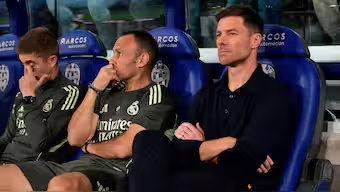
On paper, Alonso’s first 25 matches delivered a respectable 72 percent win rate. In practice, those numbers hid deeper problems. Real Madrid, a club accustomed to averaging well over two goals a game under Carlo Ancelotti, suddenly struggled with chance conversion and fluidity in the final third. Jude Bellingham, a midfield engine who once terrorized opponents with relentless forward momentum, saw his output slump drastically. Vinícius Júnior—once the symbol of unshackled Brazilian brilliance in Madrid’s attack—faced public scrutiny after being substituted during a Clásico and then booed by portions of the crowd. The president, Florentino Pérez, intervened to calm the waters; elsewhere reports of dressing room tensions and tactical incomprehension whispered through the corridors of Valdebebas.
The injury list has been eye-watering: nearly two dozen muscular problems across 25 first-team players. Questions that were once theoretical are now urgent. Did the change in training methodology that accompanied Alonso’s appointment contribute to this physical slump? Would a different appointment—or a retained fitness regime under Antonio Pintus—have prevented cricket-score injury totals? These are not just medical queries; they are “what if” questions that could rewrite Madrid’s 2025 season and beyond.
Tactically, the cracks have been visible in high-definition. The December 7 home loss to Celta Vigo wasn’t just a bad result; it was an x-ray of a team misaligned with its coach’s intent. A compact 5-3-2 press from Celta exposed Madrid’s asymmetrical build-up as brittle rather than bold. Two red cards later, and the match became a parable of miscommunication. Fans and pundits began to ask: was Alonso forcing a philosophy that his players did not fully understand, or did the players resist a system that demanded new routines and sacrifices?
Off the pitch, contract standoffs and transfer choices compounded the angst. Vinícius’ situation is particularly fraught: out of contract beyond 2027 and reportedly receiving serious interest from Saudi clubs, his potential exit would be seismic. Meanwhile, Endrick’s proposed loan to Lyon read like a bewildering footnote: why invest in a talent only to sideline him in the season he could break through? In short, the season’s story has become a tangle of managerial decisions, squad mismanagement, and moment-by-moment tactical gamble.
The Game Of Tomorrow
If you think this year’s turbulence is an isolated storm, consider it the opening salvo in a campaign that will determine Madrid’s medium-term identity. The choices made in the next six to twelve months will either cement a new tactical DNA or return the club to familiar hands and philosophies.
Short Term Implications (6–12 Months)
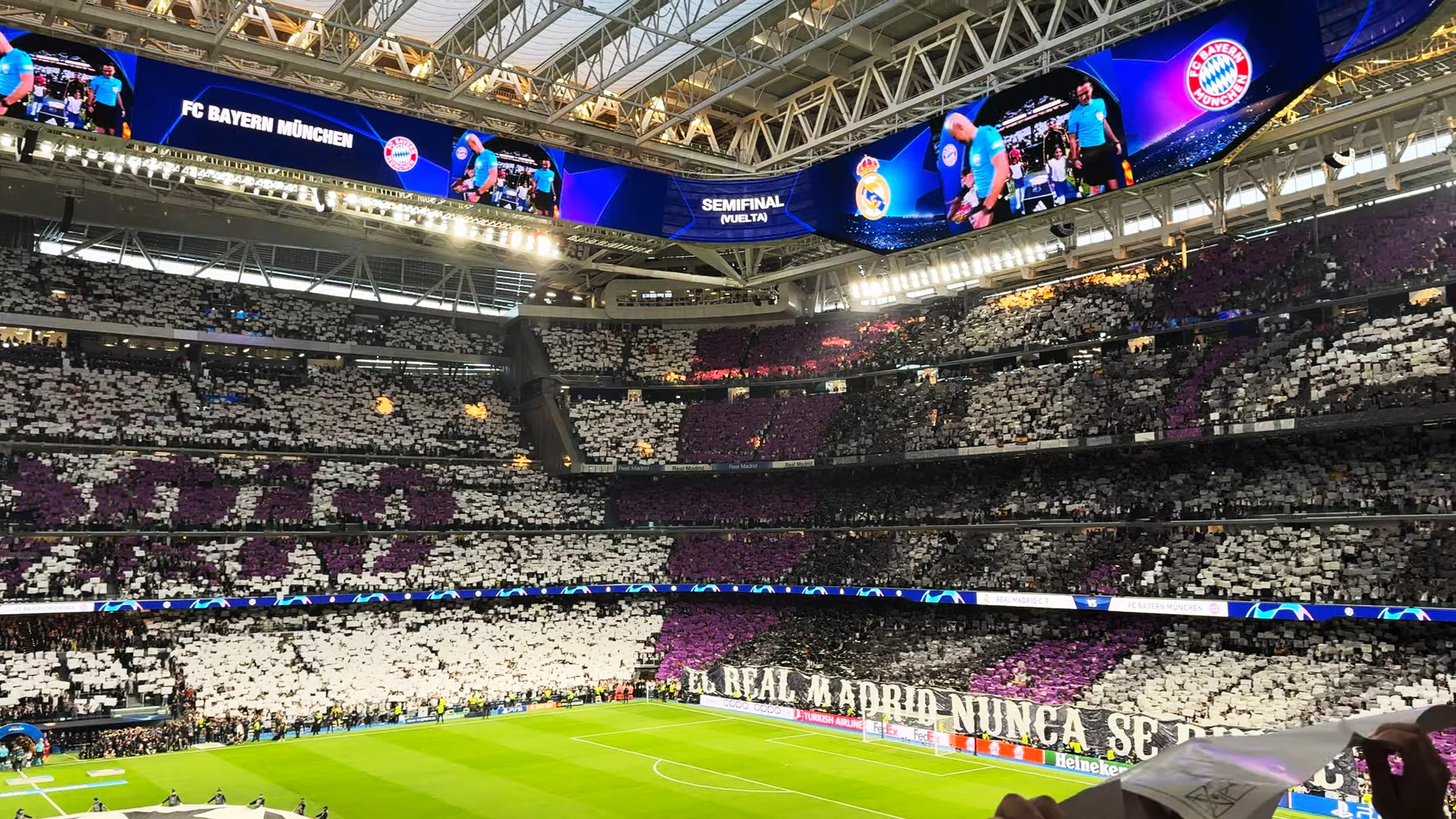
The immediate fork in the road is stark: Champions League fate, a winter transfer window, and the management of dressing-room morale. Real Madrid faces Manchester City in a pivotal two-legged playoff that feels less like a fixture and more like a referendum on Alonso’s project. Win, and Alonso buys time, trust, and a narrative cushion that could allow him to steady the ship and use the January window to plug defensive holes. Lose, and Madrid risk a high-profile elimination that would accelerate managerial reappraisal and potentially catalyze a mid-season change.
January presents both remedy and risk. There are talks of defensive reinforcements, scouting activity on prospects like Branimir Mlacic, and panic-driven considerations for immediate fixes. But short-term signings rarely solve systemic problems—especially if the tactical blueprint remains unclear and injuries continue to derail rhythm. Then there is the Endrick conundrum: loaning a young asset to Lyon might be rational short-term, but it signals a willingness to deprioritize some investments in favor of immediate stability—a philosophy at odds with Real Madrid’s history of building dynasties around long-term talent development.
Vinícius’ contract saga will also shape the near future. If Madrid fail to secure him with an agreement that acknowledges both his status and the market realities set by Saudi offers, the club could see its most electric attacker depart during his prime. That would not only be a sporting loss but an identity blow: Vinícius is woven into the club’s modern cultural narrative, and losing him would force a structural rethink of the team’s attacking spine.
Long Term Implications (3–5 Years)
Zoom out three to five years and the managerial choice in 2025 looks even larger. Xabi Alonso is not merely a man on the bench; he is the steward of the club’s next tactical chapter. If he can marry his possession, pressing, and positional concepts with subtle ego management and medical stability, Madrid could emerge with a sharper, more modern identity—one built around coordinated transitions, a rejuvenated midfield template, and judicious use of Mbappé as a pure finisher. But if tactics continue to outstrip buy-in, Madrid risks repeating a classic cycle: a high-profile experiment fails, the board reverts to a familiar laureate (think Zidane or Ancelotti), and the club loses precious time in the process.
One of the most haunting “what ifs” concerns Antonio Pintus and the conditioning framework. Had Madrid retained the previous fitness architecture, would the squad yet be fresher? It’s tempting to view injuries as bad luck, but patterns suggest systemic causes. Rebuilding confidence in a training philosophy—especially after a season marred by sidelined stars—takes years. If injuries remain a constant, the club could suffer reputational and competitive erosion that extends beyond the single campaign.
Another long-run variable is the midfield architecture. Since Toni Kroos’ retirement, Madrid have felt a tempo-control vacuum. The market offers solutions, but the right recruit must complement, not contradict, the club’s wider approach. If Alonso—and his recruitment team—identify a midfielder capable of dictating transitions and alleviating the load on Bellingham, the long-term upside is immense. If not, Madrid’s brightest prospects may underperform, talent will decay under misapplied roles, and the club will be forced into repeated cycles of expensive, disruptive fixes.
Risks And Opportunities
Risk: managerial impatience meets historical expectation. Real Madrid’s culture allows for very little grace. Winning is not a luxury; it is a requirement, and that institutional impatience can throttle patient projects. Toni Kroos’ comment—“the hardest thing as a coach is coaching Madrid”—is not hyperbole. The baseline set by Zidane and Ancelotti is uptight and exacting: tactical experimentation that costs trophies rarely survives long at the club.
Opportunity: Madrid’s core remains astonishing. Mbappé’s scoring feats—he matched Cristiano Ronaldo’s calendar-year goals record—signal that the finishing talent is present. Jude Bellingham, even in a downturn, is a generational talent whose best version could anchor midfield domination. Youth prospects like Franco Mastantuono and defensive additions hint that a thoughtful rebuild is possible without a fire sale. The board’s financial and recruitment reach remains world-class; what’s required is strategic patience married to decisive structure.
Risk: a managerial mismatch that fractures the dressing room and accelerates exits. Rodrigo, Vinícius, or Bellingham leaving—or even suffering prolonged dips in form—could destabilize recruitment, fan trust, and the club’s commercial aura. Opportunity: a successful integration of Alonso’s tactical ideas could turn Madrid into the continent’s most nuanced pressing-possession hybrid, marrying the club’s historical offensive excess with modern structural discipline.
Risk: short-term fixes in the transfer market that paper over structural failures. Opportunity: surgical, targeted signings—especially a Kroos-like tempo controller—could re-establish functional balance and allow Madrid to convert their remarkable chance creation into the trophy-laden returns that the Bernabéu demands.
Hot Take Prediction: Real Madrid will narrowly avoid catastrophic failure this season—eliminating Manchester City in the Champions League playoff and snatching a Spanish Super Cup victory against Barcelona—but will miss the La Liga title. Xabi Alonso’s tenure will be judged as having run its course by summer 2026, prompting a return to a familiar face and the appointment of Zinedine Zidane in a bid to recalibrate the club’s tactical direction and reestablish dressing-room clarity.
Conclusion
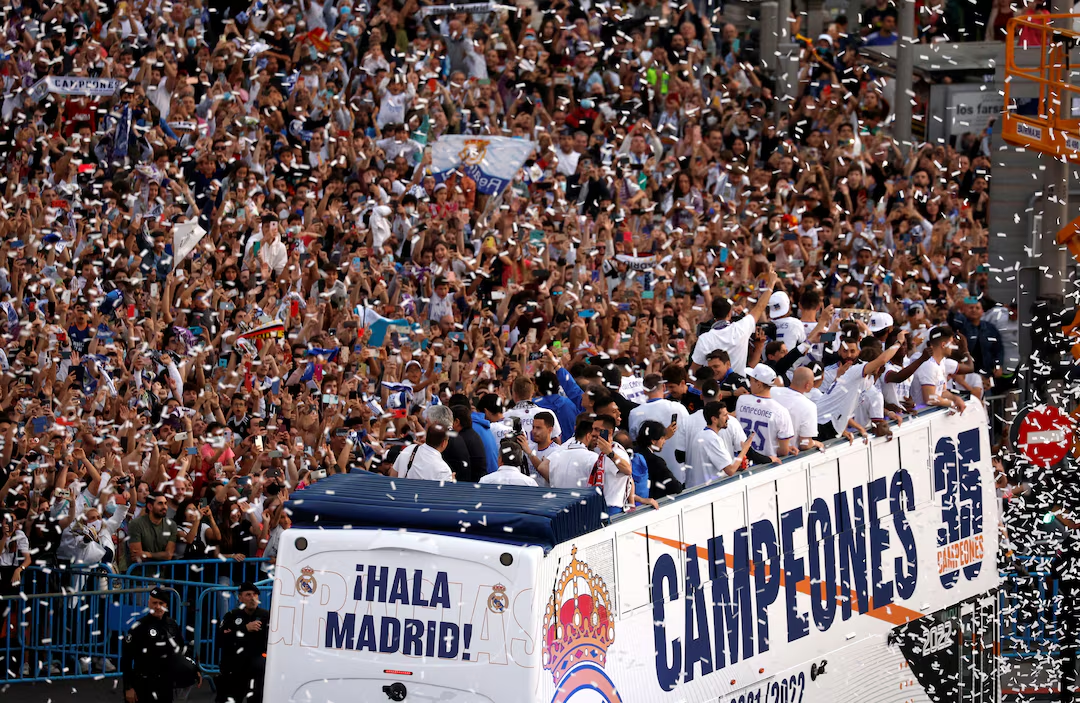
Real Madrid’s 2025 season is a living “what if” thought experiment. Every substitution, every training tweak, and every negotiation has become a potential branch in alternate histories where the club either cements a future-proof identity or retreats to the comfort of past successes. Xabi Alonso’s arrival carried the optimism of renewal: a younger tactician, contemporary ideas, and a hope that the club could modernize without sacrificing glory. Instead, a cluster of variables—injuries, tactical resistance, contract tensions, and a brutally unforgiving environment—has rendered this season a test of Madrid’s institutional resilience.
If Madrid are to convert this crisis into a narrative of rebirth, the club must be surgical in three areas: medical and conditioning stability, role clarity for elite talents, and recruitment that solves tactical deficits rather than masking them. Above all, leadership must decide whether it values patient architecture or immediate silverware. The headache for Florentino Pérez and his advisors is that Madrid’s DNA has never been patient.
What’s your take?
🎙️ For the full debate, tune into our latest podcast episode of The Game of Tomorrow.
References
- Ancelotti Discusses Champions League Playoff Against Manchester City • Real Madrid Official • February 10, 2025
- Real Madrid President Identifies Managerial Solutions Amid Crisis • Madrid Universal • December 2025
- Real Madrid 0–2 Celta Vigo Tactical Analysis • Footy World Media • December 9, 2025
- Three ‘What If’ Moments of 2025 • Managing Madrid • December 2025
- Xabi Alonso Appointed Real Madrid Head Coach • Wikipedia • 2025
- How Xabi Alonso’s Start Rates Among Modern Real Madrid Coaches • ESPN • December 2025
- Tactical Analysis of Xabi Alonso’s First El Clásico • Breaking the Lines • 2025
- Dressing Room Rifts and Rotten Results Leave Xabi Alonso Under Pressure • Goal.com • December 2025
- How Dressing Room Tensions and Tactical Issues Plague Real Madrid • Goal.com • December 2025
- Vinicius Junior Exit From Real Madrid Talked Up • Sports Illustrated • December 2025
- Karim Benzema Exposes Real Madrid’s Problems with Chemistry and Roles • beIN SPORTS • December 12, 2025
- Xabi Alonso Given Reality Check by Legend Toni Kroos • Sports Illustrated • 2025
- Ancelotti’s Real Madrid Departure and Brazil National Team Move • ESPN • May 2025
- Real Madrid 0-2 Celta Vigo Match Analysis • ESPN • December 7, 2025
- Manchester City vs Real Madrid Champions League Playoff • Real Madrid Official • February 11, 2025
- Mbappé Equals Cristiano Ronaldo’s Calendar Year Record • Real Madrid Official • December 20, 2025
- Jude Bellingham Facing Uncomfortable Situation at Club and International Level • Madrid Universal • 2025
- Rising Injuries Put Real Madrid in State of Extreme Concern • Madrid Universal • 2025
- Real Madrid Track Croatian Defender Branimir Mlacic • Madrid Universal • 2025
- Rodrygo’s Historic Goal Drought at Real Madrid • beIN SPORTS • December 1, 2025
- Real Madrid vs Manchester City Tactical Analysis • Total Football Analysis • 2025
- Xabi Alonso’s Tactical Approach at Real Madrid • Total Football Analysis • 2025
- Carlo Ancelotti Breaks Silence on Real Madrid Departure Timeline • Sports Illustrated • 2025
- Toni Kroos Opens Up on Real Madrid’s Recent Struggles • Sports Illustrated • 2025
- Vinicius Junior Contract Demands and Potential Saudi Pro League Move • Goal.com • December 2025
- Florentino Perez Backs Vinicius Junior After Difficult Night at Bernabeu • Goal.com • 2025
- Endrick Faces Uncertain Future at Real Madrid Amid Limited Playing Opportunities • ALM Intelligence • December 8, 2025
- Real Madrid’s Transfer Plan for Endrick Revealed as Out-of-Favour • Goal.com • 2025
- Franco Mastantuono and Other Young Talents Set to Make Champions League Debuts • Goal.com • 2025
- 2025-26 Champions League Format Explanation • beIN SPORTS • August 1, 2025
- Real Madrid’s Biggest Problem: Chance Conversion Not Creation • Managing Madrid • 2025
- Rodrygo Equals Staggering 123-Year Real Madrid Goal Drought Record • Sports Illustrated • 2025