Tottenham vs. West Ham: Premier League Relegation Goes to Final Day
Forty-eight years. That is how long Tottenham Hotspur have called England’s top division home — through the birth of the Premier League, through Champions League finals and Europa League glory, through the highs of Pochettino and the lows of everything that came after. On Sunday, May 24, 2026, all of it is on the line. One match. One afternoon. And somewhere across London, West Ham United are holding their breath too.
This is Premier League relegation at its most operatic, most brutal, and most consequential — a final-day reckoning that threatens to redraw the map of English football.

What’s Happening Now
The Relegation Equation
The mathematics, at least, are mercifully simple. Tottenham sit 17th with 38 points. West Ham are 18th with 36. Two points and a goal difference gulf of twelve separate the clubs — Spurs at -10, the Hammers at -22 — and that gap is the only thing standing between north London and the Championship.
Burnley and Wolverhampton Wanderers are already down, their fates sealed weeks ago. The final relegation place will be decided simultaneously across all twenty stadiums on Sunday afternoon, in the Premier League’s traditional final-day format. For Spurs, the only losing scenario is a defeat to Everton combined with a West Ham win over Leeds United. A draw, almost certainly, keeps them up on goal difference alone. For West Ham, there is no margin at all — anything less than three points means the drop, full stop.
It is the kind of fixture list that makes neutral fans set four alarms and pour a large drink before noon.
How Spurs Got Here: A Season Of Catastrophic Collapse
To understand how Tottenham arrived at this precipice, you have to rewind to May 2025 — and the moment their Europa League triumph in Bilbao should have felt like a new dawn. Instead, it was the last flicker before a long darkness.
Spurs were Champions League finalists under Mauricio Pochettino in 2019. They won the Europa League under Ange Postecoglou less than twelve months ago, becoming the European club competition winners with the lowest-ever domestic league finish after ending 2024–25 in 17th place — one position above the drop. The club sacked Postecoglou on June 6, 2025, citing poor Premier League form. A trophy in one hand, a P45 in the other. Only Spurs.
The 2025–26 season brought no improvement, only escalation. Thomas Frank was appointed to steady the ship and lasted eight months before being dismissed on February 11, leaving the club 14th and five points from the relegation zone. Igor Tudor arrived as interim manager and lasted precisely 44 days — seven games, one point, a 7-5 aggregate Champions League humiliation against Atlético Madrid, and a final straw defeat to Nottingham Forest. He was gone by March 29.
That made Tudor the sixth managerial appointment since Pochettino’s exit in November 2019. Roberto De Zerbi became the seventh, inheriting a squad that had not won a Premier League game in 2026 — their last league victory, a 1-0 win at Crystal Palace on December 28, now feeling like a distant memory from another era. Since the start of last season, Spurs have lost twice as many league games as they have won: 37 defeats against 18 victories. Those numbers belong to a relegation club. The table agrees.
De Zerbi’s first competitive act was a 1-0 defeat at Sunderland in April — a result that pushed Spurs into the bottom three for the first time this late in a season in Premier League history. The final lifeline, a midweek trip to Stamford Bridge, slipped away in a 2-1 defeat to Chelsea. A point in west London would have ended the nightmare. Instead, it goes to Sunday.
The Historical Stakes
There is a reason the football world has stopped to watch. Tottenham have spent 48 consecutive seasons in England’s top division. Their last relegation came in 1976–77, when they finished 22nd in the Football League First Division and dropped into the second tier. Since earning promotion in 1978 — before the Premier League even existed — they have never gone back.
Only Arsenal (106 consecutive top-flight seasons since 1919), Everton (72 since 1954), Liverpool (64 since 1962), and Manchester United (51 since 1975) have longer uninterrupted runs in the first division. Spurs are fifth on that list. By Sunday evening, they could be off it entirely.
To frame the magnitude: the last time Tottenham were relegated, Jimmy Carter was President of the United States, the Sex Pistols had just released Never Mind the Bollocks, and the concept of a £1.2 billion football stadium would have sounded like science fiction.
The Final Day Fixtures
All matches kick off simultaneously on Sunday, May 24. Tottenham vs. Everton is broadcast on NBC/Peacock and Sky Sports Main Event. West Ham vs. Leeds United is on USA Network and Sky Sports Football. The Toffees are not merely making up the numbers — with eighth-placed Chelsea still theoretically within reach on goal difference, David Moyes’ side have European qualification as a carrot. They will not be arriving at Spurs to do anyone any favours.
West Ham’s Broader Fallout
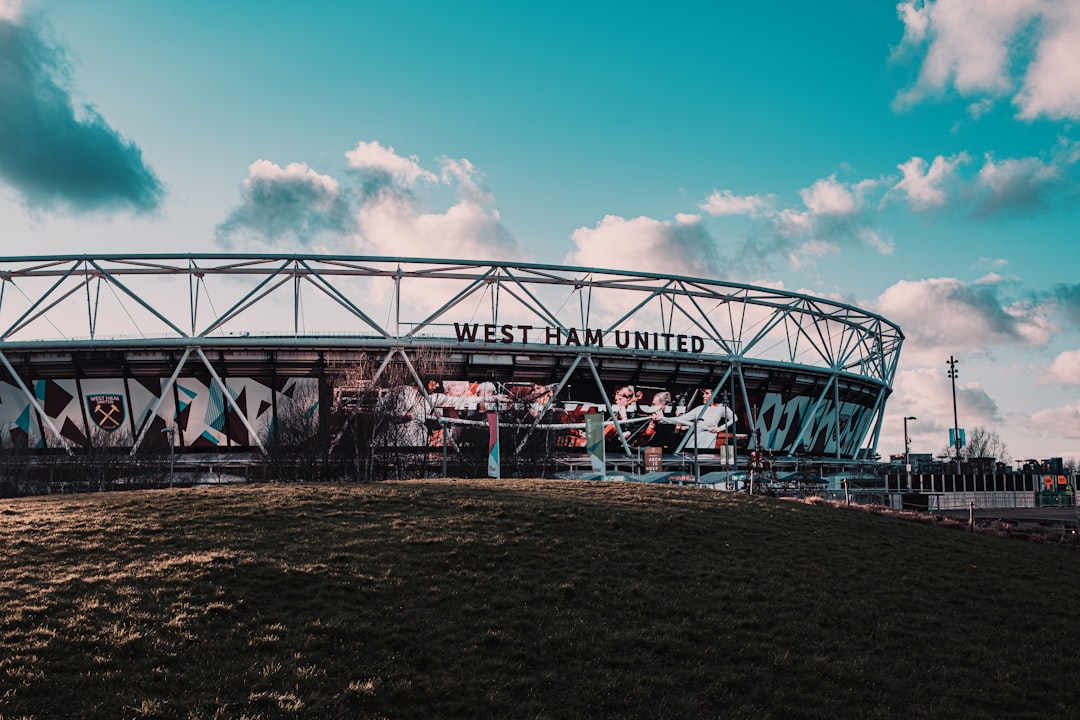
West Ham’s predicament carries consequences that stretch well beyond the dressing room and into the halls of the Greater London Authority. Under the terms of the club’s 99-year lease at London Stadium — the former Olympic venue that Sadiq Khan once described as “the worst deal imaginable” — West Ham would pay approximately half their current annual rent of £4.4 million if relegated. That shortfall, estimated at £2.5 million annually, falls to London taxpayers, who already contribute to the stadium’s operating costs.
The Championship also features a longer fixture list: 23 home matches instead of 19, which drives stewarding expenditure higher still. Mayor Khan has been vocal in criticising the lease terms negotiated under Boris Johnson, which he argues heavily favour the club. If the Hammers go down, that political argument will grow considerably louder.
Promoted Clubs Waiting In The Wings
Someone, of course, must come up. Coventry City and Ipswich Town have already secured their Championship promotions and will be joined by the winners of the playoff final between Hull City and Middlesbrough, scheduled for May 23. Whoever emerges from Wembley will be stepping into a Premier League that may look subtly but significantly different by the following morning.
The Game Of Tomorrow
Short-Term Implications: The Financial Reckoning
If Tottenham are relegated, the financial consequences arrive fast and hit hard. New analysis from Bookies.com puts the estimated Year One cost of the drop at £181.5 million, with leading financial experts projecting between £230 million and £275 million less in Championship revenue compared to the current Premier League campaign.
The figure that sharpens everything is Tottenham’s £851.7 million debt pile — the largest in the Premier League, much of it tied to the £1.2 billion stadium that was supposed to be the foundation of a new golden era. Lending covenants frequently hinge on top-flight status, and a prolonged stay in the Championship could force deeply uncomfortable conversations with lenders. A roughly £40 million-a-year income stream from NFL games and stadium events offers a partial buffer, but nothing close to full cover.
The player exodus question is equally urgent. Per credible reporting from David Ornstein, the vast majority of the Tottenham first team have a 50% wage-reduction clause triggered by Premier League relegation — a figure materially more aggressive than the industry-standard 25–30%, and one that reflects a deliberate Levy-era policy of insuring against precisely this tail risk during the high-cost stadium period. Finance expert Professor Rob Wilson has warned that even 50% may not be enough: “That’s a fairly meaningful reset on a wage bill that’s been running into nine-figures annually, but the reality is you need to cut your wage bill by about 75 per cent if you’re going to slot into Championship revenue.”
For West Ham, the calculus is similarly brutal. It is hard to imagine James Maddison or Jarrod Bowen accepting Championship football without a fight — or without a transfer request. The London Stadium’s financial structure only compounds the pressure, with higher stewarding costs and reduced commercial revenues making the economics of second-tier football particularly punishing at a venue built for Olympic spectacle.
Roberto De Zerbi’s own position is entirely contingent on Sunday’s result. As transfer journalist Fabrizio Romano noted ahead of the Italian’s appointment: “What’s needed is Tottenham to stay in the Premier League, because if they go down to the Championship, obviously, it’s going to be a completely different situation.” That understatement may be the most English sentence ever uttered by an Italian.
Long-Term Implications: The Fracturing Of The Big Six
Here is the question that keeps Premier League executives awake at night: what happens to the concept of the Big Six if one of its members disappears into the Championship?
Tottenham’s commercial strength has been built on global visibility — front-of-shirt deals, sleeve sponsorships, and technical partnerships worth tens of millions annually, all predicated on the assumption of top-flight football and regular European competition. Relegation does not merely reduce revenue; it erodes the brand equity that makes those revenues possible in the first place. Sponsors negotiate at depressed rates. Global fan engagement drops. Players push for exits, reducing the squad quality that attracts the next generation of signings.
The Leicester City cautionary tale casts a long shadow here. The Foxes went from Premier League champions in 2016 to relegation, financial chaos, and a points deduction for breaching Profit and Sustainability Rules — eventually sliding into League One. The speed and totality of that collapse would have seemed impossible in 2016. It happened anyway.
New analysis suggests Spurs could lose more than £636 million over three Championship seasons, with the peak revenue impact arriving in Year Two, when parachute payments step down, premium memberships expire, and sponsor renewals occur at their most depressed rates — all while the £851 million debt continues to accrue interest. The Premier League’s incoming Squad Cost Ratio and Sustainability and Systematic Resilience regulations, which govern clubs from the 2026–27 season onwards, add another layer of complexity to any rebuild. The path back from the Championship has never been more structurally demanding.
For supporters, the emotional toll is already immense. One Spurs fan, quoted by ESPN, captured the mood with painful precision: “An important win, but you still feel helpless. The minute we survive or get relegated, it’s going to unleash hell on the ownership.” And yet, in a bitterly ironic twist, the threat of Premier League relegation has produced something rare at Spurs — genuine unity among a fanbase that has spent years divided over Daniel Levy’s stewardship. Whether that unity survives the summer, regardless of Sunday’s result, is another question entirely.
If the worst happens, one broadcaster put it most starkly: a Tottenham relegation would rank as the most stunning fall from grace in European football since Juventus were expelled from Serie A following the Calciopoli scandal in 2006. That is the company Spurs are keeping in the history books right now.

🔥 Hot Take Prediction: Tottenham will survive on May 24 — De Zerbi gets his first Premier League win and the Spurs faithful breathe again. But survival solves nothing. The structural rot — the managerial carousel, the debt mountain, the wage bill, the absence of a coherent footballing identity — runs too deep for one result to paper over. Without a complete ownership reset, a full squad overhaul, and something approaching a De Zerbi miracle across an entire season, Spurs will be back in this conversation within two years. The real story on Sunday isn’t whether Tottenham avoid the drop. It’s whether the Premier League’s Big Six era has already permanently fractured — and whether anyone in north London is brave enough to admit it.
What’s your take?
For the full debate, tune into our latest podcast episode of The Game of Tomorrow.
References
- Premier League Relegation Battle: How It Stands Ahead Of Final Day - Premier League Official - May 19, 2026
- ‘I Want My Life Back’: The Premier League Relegation Battle, Through The Eyes Of Fans - ESPN - May 24, 2026
- How To Watch Premier League Final Day 2026 - TechRadar - May 24, 2026
- Tottenham vs Everton Confirmed Lineups For Final Day Decider - Last Word On Sports - May 24, 2026
- Spurs Feeling Blue As Relegation Battle Goes To Final Day - RTÉ Sport - May 19, 2026
- How Did Tottenham Go From Europa League Champs To A Very Real Relegation Battle? - ESPN - March 29, 2026
- The Economic Cost Of A Tottenham Relegation: £181.5 Million On The Line - Yahoo Finance / Bookies.com - May 1, 2026
- The Commercial Costs Of Tottenham Relegation - The Football Week - May 9, 2026
- Revealed: Tottenham Could Lose £200m If Relegated From Premier League - Goal.com - April 18, 2026
- The Damaging Cost Of Premier League Relegation For Tottenham - Sports Illustrated - April 22, 2026
- West Ham Relegation Could Cost London Taxpayers £2.5m - Inside World Football - May 19, 2026
- West Ham Relegation Set To Cost Taxpayers Millions - GB News - May 2026
- Tottenham’s Relegation Looks Increasingly Inevitable After Loss At Sunderland - ESPN - April 12, 2026
- 2025 UEFA Europa League Final - Wikipedia
- 2025–26 Premier League - Wikipedia
- Tottenham Hotspur Relegation Scenario Analysis, Financial And Capital Structure Impact - The ESK - May 3, 2026
- Premier League Relegation: The Painful Cost Of The Drop - Grosvenor Casinos Blog - May 2026
- Igor Tudor Sacked By Tottenham After Just Seven Games In 44 Days - Fox Sports - March 29, 2026